


The overtopping volume is not only important for engineering purpose but
also the dynamic properties, maximum velocity and overtopping rate, are significantly required for designing offshore structures.
However, few studies have been investigated statistical property of the
maximum velocity for random waves and there is no general theory to
predict velocity profile above SWL.
Thus the simple assumptions are required to statistically formulate this
problem as a first step.
The most simplest approach to predict the maximum velocity is assuming the
linear and local sinusoidal wave assumptions to the wave dynamics near
the crest.
Using these assumptions it is possible to estimate the maximum
horizontal wave velocity component
 as a function of the wave amplitude
  .
.
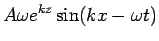
For linear sinusoidal wave in deep-water, the surface elevation and
horizontal velocity component have following relations.
 is small enough and expanding
 up to
up to  and
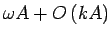
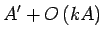
and 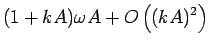 , the horizontal velocity component at the crest:
can be approximated as
, the horizontal velocity component at the crest:
can be approximated as
 , for the case of
  ,
respectively.
The truncation of
,
respectively.
The truncation of
 does not gives so significant error in
comparison with the local sinusoidal assumption for random wave field.
Normalize
does not gives so significant error in
comparison with the local sinusoidal assumption for random wave field.
Normalize  by
by  ,
,  and
and  , Eq.(22) becomes
|
=11cm
![\epsfbox[47 184 550 606]{figures/exp_amp-u2_case1.eps}](img141.png)
![\includegraphics[width=11.0cm]{figures/exp_amp-u2_case1.eps}](img143.png)
(a) Case 1.
=11cm ![\epsfbox[47 184 550 606]{figures/exp_amp-u2_case2.eps}](img142.png)
![\includegraphics[width=11.0cm]{figures/exp_amp-u2_case2.eps}](img144.png)
(b) Case 2. |
Before formulate the PDF of the maximum horizontal velocity model,
it is necessary to check the assumptions above paragraph.
A local sinusoidal velocity field with small wave steepness was assumed
for random wave field for relatively large amplitude waves.
To check these assumptions and truncation,
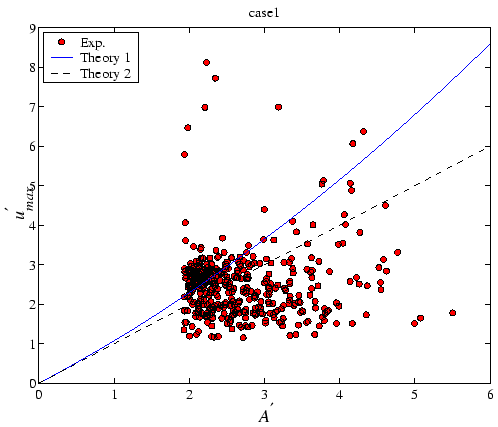
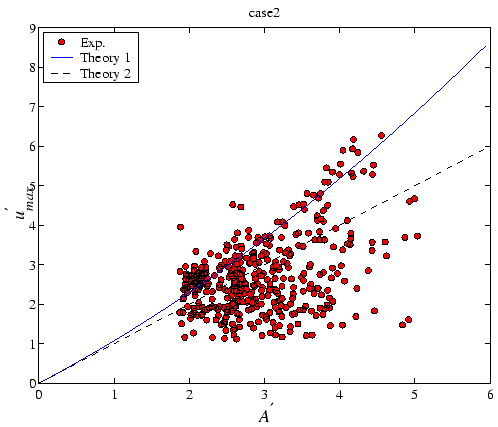
Fig.13 compares the measured relationship between
normalized wave crest amplitudes  and the maximum horizontal
velocity
and the maximum horizontal
velocity
 with approximated solutions by Eq.(24)
and Eq.(25).
The approximated solution by Eq.(24) seems to
follow close to the maximum edge of the measured data, particularly in
Case 2.
Another approximated solution by Eq.(25) is
smaller than Eq.(24) and passes in the middle of the measured data.
It means that the maximum horizontal velocity
of measured data was
smaller than predicted by the linear sinusoidal wave theory.
Generally, the linear wave theory overestimates nonlinear random wave
kinematics.
Therefore these results are acceptable for us.
On the other hand, the scatter of
in the figure for lower deck case
(Case 1) is larger than higher deck level case (Case 2).
Specially, some small amplitude waves have very high speed horizontal velocity
in Case 1.
These are collapsing waves that break on the deck and shoot across the
deck with very high speed.
The rest of the waves can be regarded as truncated wave that is clippedj
by the deck.
Therefore, we have to take into the consideration both of them, but
the collapsing waves are neglected in this paper.
with approximated solutions by Eq.(24)
and Eq.(25).
The approximated solution by Eq.(24) seems to
follow close to the maximum edge of the measured data, particularly in
Case 2.
Another approximated solution by Eq.(25) is
smaller than Eq.(24) and passes in the middle of the measured data.
It means that the maximum horizontal velocity
of measured data was
smaller than predicted by the linear sinusoidal wave theory.
Generally, the linear wave theory overestimates nonlinear random wave
kinematics.
Therefore these results are acceptable for us.
On the other hand, the scatter of
in the figure for lower deck case
(Case 1) is larger than higher deck level case (Case 2).
Specially, some small amplitude waves have very high speed horizontal velocity
in Case 1.
These are collapsing waves that break on the deck and shoot across the
deck with very high speed.
The rest of the waves can be regarded as truncated wave that is clippedj
by the deck.
Therefore, we have to take into the consideration both of them, but
the collapsing waves are neglected in this paper.
Following this result, the assumptions of local sinusoidal wave theory for horizontal velocity component predicts the maximum value of horizontal velocity component on the deck, although, the assumptions cannot expect quantitatively agreement with the experimental data.
Solving Eq.(24) for , we have
 and is characteristic wave steepness.
Thus, the maximum horizontal velocity at wave crest: is simply formulated as a function of wave crest amplitude .
Obviously, Eq.(26) is only valid linear sinusoidal wave
in deep-water but we will apply this to random waves with large
amplitude waves.
Substituting Eq.(26) into Eq.(9) gives the
PDF of maximum horizontal velocity.
and is characteristic wave steepness.
Thus, the maximum horizontal velocity at wave crest: is simply formulated as a function of wave crest amplitude .
Obviously, Eq.(26) is only valid linear sinusoidal wave
in deep-water but we will apply this to random waves with large
amplitude waves.
Substituting Eq.(26) into Eq.(9) gives the
PDF of maximum horizontal velocity.
 , we have the
exceedance probability of
on the deck given by
distribution based on a
modified form of the Weibull wave amplitude distribution with local
linear sinusoidal assumptions and is simply
referred to as the ``modified Weibull distribution" hereafter for clarity.
For the special case of
, we have the
exceedance probability of
on the deck given by
distribution based on a
modified form of the Weibull wave amplitude distribution with local
linear sinusoidal assumptions and is simply
referred to as the ``modified Weibull distribution" hereafter for clarity.
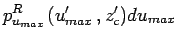
For the special case of  =2 which is the Rayleigh
condition for the wave amplitude distribution, Eq.(27)
and (28) are simplified as
distribution at crest based on a modified form of the
Rayleigh wave amplitude distribution and is simply referred to as the
``modified Rayleigh distribution" hereafter for clarity.
=2 which is the Rayleigh
condition for the wave amplitude distribution, Eq.(27)
and (28) are simplified as
distribution at crest based on a modified form of the
Rayleigh wave amplitude distribution and is simply referred to as the
``modified Rayleigh distribution" hereafter for clarity.
=11cm
![\epsfbox[50 185 547 592]{figures/theory2_Pu_z100.eps}](img155.png)
![\includegraphics[width=11cm]{figures/theory2_Pu_z100.eps}](img156.png) |
=11cm
![\epsfbox[50 185 547 592]{figures/theory2_Pu_alpha200.eps}](img157.png)
![\includegraphics[width=11cm]{figures/theory2_Pu_alpha200.eps}](img158.png) |
|
=11cm
![\epsfbox[50 185 547 592]{figures/expQpdfcase1.eps}](img114.png)
![\includegraphics[width=11cm]{figures/exp_u_pdf_case1.eps}](img159.png)
(a) Case 1.
=11cm ![\epsfbox[50 185 547 592]{figures/expQpdfcase2.eps}](img115.png)
![\includegraphics[width=11cm]{figures/exp_u_pdf_case2.eps}](img160.png)
(b) Case 2. |
|
=11cm
![\epsfbox[50 185 547 592]{figures/expQexccase1.eps}](img118.png)
![\includegraphics[width=11cm]{figures/exp_u_exc_case1.eps}](img161.png)
(a) Case 1.
=11cm ![\epsfbox[50 185 547 592]{figures/expQexccase2.eps}](img119.png)
![\includegraphics[width=11cm]{figures/exp_u_exc_case2.eps}](img162.png)
(b) Case 2. |
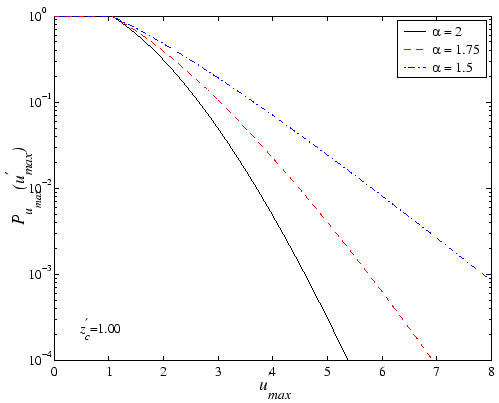
Fig.14 shows the sensitivity of the exceedance
probability of the modified Weibull
distribution on
for the case of  =1.0 and
  =0.1.
With a change in from =1.5 to =2,
the exceedance probability of
decreases one order of magnitude
at
=0.1.
With a change in from =1.5 to =2,
the exceedance probability of
decreases one order of magnitude
at
 and two orders of magnitude at
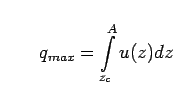 .
The
decrease is slightly faster than overtopping volume
.
The
decrease is slightly faster than overtopping volume  .
This is the reason why the function in the exponential in
Eq.(28) is proportional to
.
This is the reason why the function in the exponential in
Eq.(28) is proportional to
 .
The small characteristic wave steepness decrease exceedance
probability rapidly.
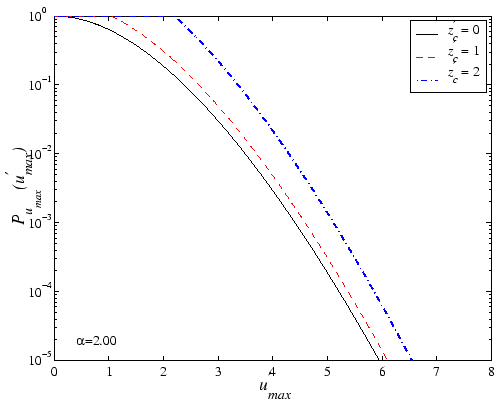
Fig.15 shows
the sensitivity of the exceedance probability of
to
the deck level for the case of =2.0.
With a change of from =0 to =2, the
exceedance probability decreases one order of
magnitude at
.
The small characteristic wave steepness decrease exceedance
probability rapidly.
Fig.15 shows
the sensitivity of the exceedance probability of
to
the deck level for the case of =2.0.
With a change of from =0 to =2, the
exceedance probability decreases one order of
magnitude at
 and two orders of magnitude
at
and two orders of magnitude
at
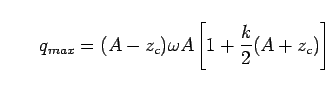 .
.
Fig.16 compares the PDF of the
normalized
for the experimental results with the
modified Rayleigh
distribution, Eq.(29),
and the modified Weibull
distribution, Eq.(27).
The both of theories for
show qualitatively worse
agreement with the experimental data.
One of reason of the differences between the theory and the measured
data is that the measured data include small
value that cannot expect
in the theory as shown in Fig.13.
Fig.17 compares the exceedance probability of
for the experimental results with the modified Rayleigh
distribution, Eq.(30), and the modified Weibull
distribution, Eq.(28).
The exceedance probability of measured
have two inflection
points for Case 1 and the both of the modified Weibull and Rayleigh
distribution cannot predict this tendency.
The main reason of this strange
distribution is some small
amplitude waves have very high horizontal velocity in Case 1 as
explained before.
These are collapsing waves effects that break on the deck and shoot across the
deck with very high speed.
The number of collapsing waves on the deck is decreased as increasing
deck height.
Therefore, the modified Weibull
distribution shows relatively
good agreement with the experimental data for high deck Case 2 in
comparison with Case 1,
although there is significant difference in the low velocity region.
Thus, the qualitative trends of high
can be estimated by
Eq.(27) and (28) for middle deck
level case.








![$\displaystyle \frac{\alpha\beta}{\sqrt{4\kappa \ensuremath{u_{max}^\prime}\,+ 1...
... \sqrt{4\kappa \ensuremath{u_{max}^\prime}\,+ 1}- 1 )
\right]^{\alpha-1}
\!\!\!$](img148.png)
![$\displaystyle \hspace{-2.5cm}
\times
\exp\left\{
-\beta
\left\{
\left[
\frac{1}...
...ight]^{\alpha}
- z_c'^{\alpha}
\right\}
\right\}
d\ensuremath{u_{max}^\prime}\,$](img149.png)
![\begin{displaymath}
P_{\ensuremath{u_{max}}\,}(\ensuremath{u_{max}^\prime}\,,z_...
...\right)
\right]^{\alpha}
- z_c'^{\alpha}
\right\}
\right\}
\end{displaymath}](img150.png)
![$\displaystyle \hspace{-2.5cm}\times
\exp\left\{
-\frac{1}{8\kappa^2}
\left[
\le...
...1
\right)^2
- 4 \kappa^2 z_c'^2
\right]
\right\}
d\ensuremath{u_{max}^\prime}\,$](img153.png)
![\begin{displaymath}
P^R_{\ensuremath{u_{max}}\,}(\ensuremath{u_{max}^\prime}\,,...
...e}\,+ 1}- 1
\right)^2
- 4 \kappa^2 z_c'^2
\right]
\right\}
\end{displaymath}](img154.png)