To validate the mathematical formulations presented in
the earlier sections and to check key assumptions, use is made
of small-scale hydraulic model tests reported previously by Cox and Scott (2001).
Their experimental setup, shown schematically in Fig.1,
and procedures are repeated here briefly.
The hydraulic model experiment was conducted at Texas A&M University in
a 36 m long by 0.95 m wide by 1.5 m high glass-walled wave flume
equipped with a flap-type wavemaker capable of generating repeatable,
irregular waves. The water depth in the tank was constant with  =0.80 m.
The model deck consisted of a 0.935 m wide by 0.61 m long
by 1.15 cm thick Plexiglas plate rigidly mounted to a steel
frame and suspended from the top of the flume.
The frame was constructed to minimize flow disturbance to
the overtopping wave.
Three cases with deck clearance heights of
=0.80 m.
The model deck consisted of a 0.935 m wide by 0.61 m long
by 1.15 cm thick Plexiglas plate rigidly mounted to a steel
frame and suspended from the top of the flume.
The frame was constructed to minimize flow disturbance to
the overtopping wave.
Three cases with deck clearance heights of  =4.515, 6.015 and 8.515 cm
were used in this study corresponding to the top deck of a fixed platform.
=4.515, 6.015 and 8.515 cm
were used in this study corresponding to the top deck of a fixed platform.
The free surface elevation,  , was recorded using a surface
piercing wave gage (Gage 1) to quantify the free surface statistics in
the vicinity of the deck.
A second wave gage (Gage 2) was mounted on the deck at the leading edge
and was used to measure the free surface elevation above the deck,
, was recorded using a surface
piercing wave gage (Gage 1) to quantify the free surface statistics in
the vicinity of the deck.
A second wave gage (Gage 2) was mounted on the deck at the leading edge
and was used to measure the free surface elevation above the deck,
 , during each overtopping event, where =0 corresponds to
the deck surface.
A laser-Doppler velocimeter (LDV) was used to measure the instantaneous
horizontal velocity,
, during each overtopping event, where =0 corresponds to
the deck surface.
A laser-Doppler velocimeter (LDV) was used to measure the instantaneous
horizontal velocity,  , at an elevation
  =2.0 mm above the deck.
The overtopping rate per unit deck width was estimated as
=2.0 mm above the deck.
The overtopping rate per unit deck width was estimated as
 =
= , assuming that the velocity profile was uniform.
Therefore, is regarded as
, assuming that the velocity profile was uniform.
Therefore, is regarded as  in this paper.
This is underestimated in comparison with real value obviously
but the differences between them become small for high deck level case.
The experimental procedure was shown by Cox and Scott (2001)
to have excellent repeatability and the sensitivity of the measured
overtopping to the LDV elevation above the deck was small.
in this paper.
This is underestimated in comparison with real value obviously
but the differences between them become small for high deck level case.
The experimental procedure was shown by Cox and Scott (2001)
to have excellent repeatability and the sensitivity of the measured
overtopping to the LDV elevation above the deck was small.
A JONSWAP wave spectrum with random phases was used to generate 20
statistically similar time series with a duration of 200 s each.
This procedure of using several short time series rather than one long
time series was adopted to minimize tank seiching and problems with wave
reflection.
All 20 runs were used for each of the three different deck clearances to
assess sensitivity of the normalized exceedance probability
distributions to the deck clearance.
The combined time series contained over 3000 waves for each case,
similar to the number of waves used in other studies
of extreme wave statistics both in the laboratory
(e.g. Kriebel and Dawson, 1993) and in the field
(e.g. Forristall, 2000)
as well as laboratory studies on the instantaneous overtopping of coastal
structures (e.g. Franco and Franco, 1999).
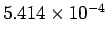
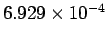
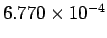
Table 1 summarizes the free surface and overtopping
statistics where
is the deck elevation,
is the still water depth,
 is the number of incident waves measured at Gage 1,
 is the significant wave height at Gage 1,
 is the corresponding significant wave period,
 is the number of overtopping events recorded at Gage 2,
 is rms value of the surface elevation at Gage 1,
 and
and  are skewness and kurtosis of the surface elevation,
 is the controlling parameter of the Weibull distribution
calculated by maximum likelihood method,
and
is the controlling parameter of the Weibull distribution
calculated by maximum likelihood method,
and
 is the rms value of overtopping volumes per unit
deck width where each
is the rms value of overtopping volumes per unit
deck width where each  is determined by integrating
  over the
duration of each event.
The relatively few overtopping events for Case 3
(=64 as listed in Table 1)
do not provide a robust statistical measure of the phenomena.
Therefore, Case 3 is excluded from further analysis.
over the
duration of each event.
The relatively few overtopping events for Case 3
(=64 as listed in Table 1)
do not provide a robust statistical measure of the phenomena.
Therefore, Case 3 is excluded from further analysis.
Following Cox and Scott (2001), a second laboratory model study with the same geometrical condition was conducted by Cox and Ortega (2002) in which they measured the detailed free surface and velocity for a single large wave overtopping the fixed deck. Fig. 2 shows the free surface profile of the incident wave measured at the same location in the flume corresponding to the leading edge of the deck both with and without the deck in place. There is only a small deviation in the total wave heights measured for the two cases (the wave crest amplitude with the deck in place is 3% larger than without the deck), and the effect of the structure on the total wave height is minimal. Thus, the deck is thin and has little influence on the incident wave.
 )
)